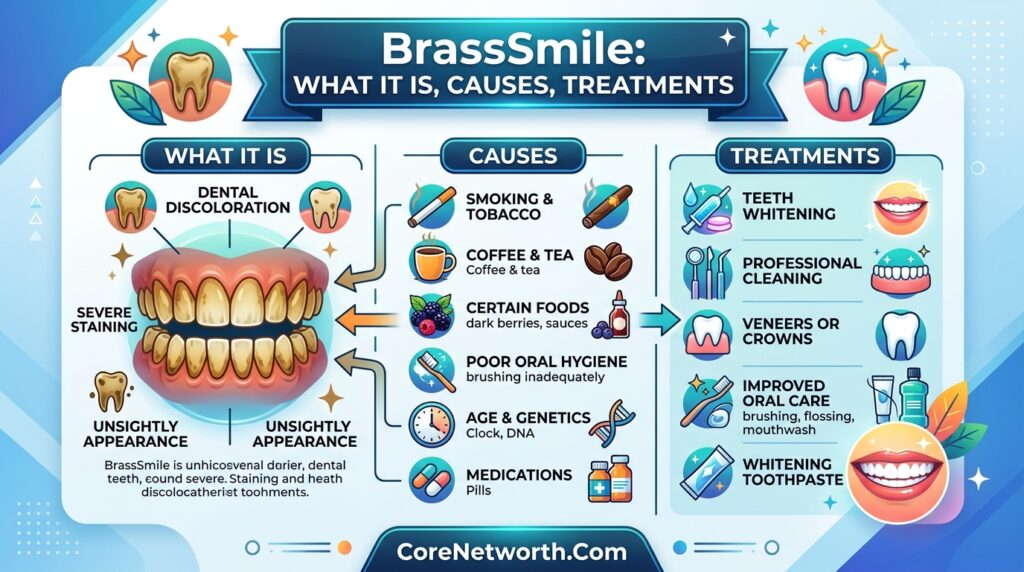



A confident smile can change the way you feel about yourself and how others see you. But when teeth develop yellow or brassy tones, many people become hesitant to smile openly. BrassSmile is commonly used as a descriptive term for a smile that has warm yellow, metallic, or brassy-looking discoloration. Several factors can contribute to this appearance, including tooth discoloration, enamel erosion, dietary stains, plaque buildup, aging, and certain dental treatments.
Understanding why teeth look brassy is the first step toward choosing the right solution. Depending on the cause, options may include better oral hygiene, professional teeth whitening, enamel protection, composite bonding, porcelain veneers, or orthodontic treatment. Whether you discovered BrassSmile through brasssmile com or are simply researching ways to improve your smile, this guide explains the causes, treatment options, prevention tips, and important questions to consider before starting cosmetic dental treatment.
What Is BrassSmile?
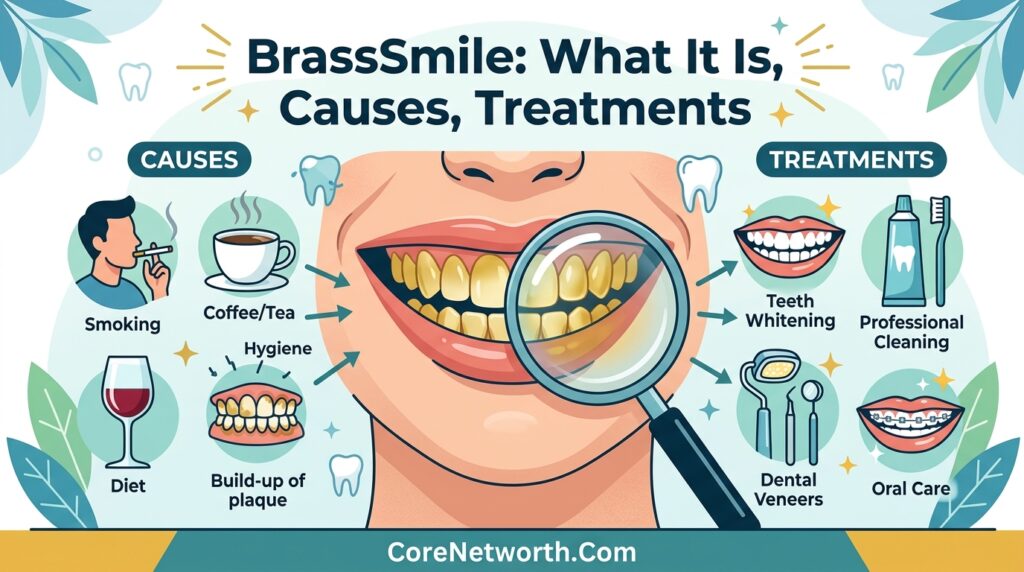
BrassSmile describes a smile in which the teeth appear noticeably yellow, warm-toned, dull, or brassy rather than bright and naturally white. It is important to understand that BrassSmile is not a standard medical diagnosis or a specific dental disease. Instead, it can be understood as a descriptive phrase for a particular appearance of the teeth.
Natural teeth are not always perfectly white. The color of healthy teeth can vary from person to person because enamel is partly translucent and the underlying dentin naturally has a yellowish color.
When enamel becomes thinner, stains accumulate, or the teeth are affected by plaque and lifestyle habits, the underlying yellow tone may become more noticeable.
For that reason, treating a brassy smile starts with identifying why the discoloration is happening rather than simply trying to make the teeth whiter.
What Causes a BrassSmile Appearance?
Several different factors can make teeth appear yellow or brassy. Some causes involve surface stains, while others are related to the natural structure of the tooth.
1. Enamel Erosion and Dentin Exposure
Enamel is the hard outer layer that protects your teeth. Although it is strong, it can gradually wear down because of aging, acidic foods and drinks, acid reflux, or aggressive brushing.
Under the enamel is dentin, which naturally has a deeper yellow color. As enamel becomes thinner, more of the dentin’s natural color may show through.
This means that simply brushing your teeth harder will not necessarily make them look whiter. In fact, overly aggressive brushing can contribute to enamel wear.
2. Coffee, Tea, and Other Staining Drinks
Your daily diet can have a major effect on tooth color.
Common sources of tooth staining include:
- Coffee
- Black tea
- Dark-colored soft drinks
- Red wine
- Certain fruit juices
- Deeply pigmented sauces
- Berries and other strongly colored foods
These foods and drinks can leave pigments on the tooth surface over time. Frequent exposure can make teeth look darker, duller, or more yellow.
3. Tobacco Use
Smoking and other forms of tobacco use can contribute to yellow and brown tooth stains. Tobacco-related discoloration can become increasingly difficult to remove as stains accumulate.
Reducing or avoiding tobacco is therefore helpful not only for maintaining a brighter smile but also for overall oral health.
4. Plaque and Tartar Buildup
Poor oral hygiene can allow plaque to accumulate around and between the teeth. If plaque is not removed properly, it can harden into tartar.
Tartar may appear yellow or brown and can make the entire smile look less clean.
Regular brushing, flossing, and professional dental cleanings can help control plaque and tartar buildup.
5. Aging
Tooth color can naturally change with age.
Over time, enamel may become thinner while dentin remains underneath. This can make the natural yellow tone of the dentin more visible.
Years of exposure to coffee, tea, acidic foods, and other staining substances can also contribute to age-related tooth discoloration.
6. Braces and Orthodontic Appliances
Traditional braces can make cleaning more challenging because food particles and plaque may collect around brackets and wires.
If oral hygiene is difficult during orthodontic treatment, discoloration can develop in areas that are harder to reach.
Careful brushing and cleaning around orthodontic hardware can help reduce this problem.
7. Dental Restorations
Crowns, veneers, fillings, and other dental restorations may not respond to conventional teeth-whitening treatments in the same way natural enamel does.
If your natural teeth become whiter while an older restoration remains unchanged, the difference in shade may become more noticeable.
A dentist can determine whether replacing or adjusting a restoration is appropriate.
Can a BrassSmile Be Fixed?
In many cases, the appearance of yellow or brassy teeth can be improved, but the best approach depends on the underlying cause.
A dentist may first examine your teeth and gums to determine whether the discoloration is caused by surface stains, enamel changes, decay, restorations, or another issue.
Possible options include:
- Professional teeth whitening
- Whitening products for home use
- Professional dental cleaning
- Improved oral hygiene
- Composite bonding
- Porcelain veneers
- Clear aligners
- Other cosmetic dentistry procedures
The goal should not simply be to achieve extremely white teeth. A healthy and natural-looking smile should also be considered.
Professional Teeth Whitening for BrassSmile
Professional teeth whitening is one of the most common cosmetic treatments for certain types of tooth discoloration.
A dental professional can assess the condition of your teeth before recommending a whitening treatment. Professional whitening products generally use stronger active ingredients than many over-the-counter products.
Depending on the individual, treatment may help reduce certain types of stains caused by food, drinks, tobacco, and other external factors.
However, whitening is not a universal solution. Some types of intrinsic discoloration may respond differently, and existing crowns, veneers, or fillings may not whiten like natural teeth.
For this reason, professional evaluation is particularly useful when discoloration is significant or persistent.
Can Whitening Toothpaste Help?
Whitening toothpaste can help remove some surface stains and may make teeth appear cleaner and brighter.
However, whitening toothpaste generally cannot dramatically change the natural color of your teeth. It also cannot rebuild enamel that has already been lost or remove every type of intrinsic discoloration.
For mild surface staining, it may be a useful part of an everyday oral-care routine.
Choose dental products carefully and avoid aggressive brushing. Whitening should never come at the expense of enamel health.
Composite Bonding for Discolored or Damaged Teeth
Composite bonding is a cosmetic dental procedure in which a tooth-colored resin is applied to the tooth.
It may be useful for people who have:
- Small chips
- Minor gaps
- Uneven tooth surfaces
- Localized discoloration
- Certain cosmetic imperfections
The resin can be shaped and polished to create a more uniform appearance.
Composite bonding can sometimes be completed relatively quickly, but its suitability and durability depend on the individual tooth and the location of the restoration.
Porcelain Veneers for a More Uniform Smile
Porcelain veneers are thin custom-made shells designed to cover the visible front surface of teeth.
They can be used to improve several cosmetic characteristics at once, including:
- Tooth color
- Shape
- Size
- Minor unevenness
- Certain visible imperfections
Veneers may be considered when whitening alone cannot produce the desired cosmetic result.
However, veneers are a significant dental treatment and are not appropriate for everyone. A qualified dentist should evaluate your enamel, bite, gums, and overall oral health before recommending them.
Can Clear Aligners Improve a BrassSmile?
Clear aligners do not whiten teeth directly, but orthodontic treatment can improve the overall appearance of a smile.
Crowded or overlapping teeth can create shadows and make some areas difficult to clean. Straightening the teeth may make daily oral hygiene easier and create a more even smile.
Clear aligners are designed to gradually move teeth into improved positions. Depending on the case, traditional braces or other orthodontic treatments may also be appropriate.
The right treatment depends on the person’s bite, tooth position, and dental health.
BrassSmile and Daily Oral Hygiene
Good oral hygiene is one of the simplest ways to protect your smile.
A consistent routine should generally include:
Brush Gently
Use a soft-bristled toothbrush and avoid aggressive scrubbing. Brushing too hard can irritate the gums and contribute to enamel wear.
Floss Every Day
Flossing helps remove food particles and plaque from areas that a toothbrush cannot easily reach.
Drink Water After Staining Foods
Drinking water after coffee, tea, and strongly colored foods can help rinse away some residue and reduce prolonged exposure to staining substances.
Keep Regular Dental Appointments
Professional dental cleanings can remove tartar that cannot be removed effectively with ordinary brushing.
Regular examinations also give your dentist an opportunity to identify cavities, gum problems, enamel damage, or other causes of tooth discoloration.
Foods and Drinks That May Stain Teeth
Some foods and beverages are more likely to contribute to surface staining.
Common examples include:
- Coffee
- Black tea
- Red wine
- Cola and dark sodas
- Soy sauce
- Tomato-based sauces
- Dark berries
- Tobacco products
You do not necessarily have to eliminate every staining food from your diet. Instead, good oral hygiene and sensible habits can help reduce their impact.
How to Prevent a Brassy Smile
Preventing discoloration is often easier than trying to correct extensive staining later.
Here are some practical habits that can help:
- Brush your teeth twice a day.
- Floss or clean between your teeth daily.
- Drink water regularly.
- Rinse your mouth after staining drinks.
- Avoid brushing immediately after consuming highly acidic foods or drinks.
- Limit tobacco exposure.
- Maintain regular dental checkups.
- Follow professional recommendations for whitening products.
- Avoid excessive use of abrasive whitening products.
- Address dental problems early.
These habits support both a brighter smile and better overall oral health.
BrassSmile: Professional Treatment vs. Home Care
The right approach depends on the cause of the discoloration.
| Option | Best For | Main Benefit |
|---|---|---|
| Regular brushing | Daily maintenance | Removes plaque and debris |
| Flossing | Between-teeth cleaning | Helps control plaque |
| Whitening toothpaste | Surface stains | Gradual stain removal |
| Home whitening | Certain mild discoloration | Convenient treatment |
| Professional whitening | Suitable stains | Faster, supervised whitening |
| Composite bonding | Chips and localized imperfections | Cosmetic reshaping |
| Porcelain veneers | Certain significant cosmetic concerns | Shade and shape improvement |
| Clear aligners | Misalignment | Straighter smile |
A dental professional can help determine which option is appropriate instead of relying solely on the appearance of the teeth.
Why Teeth May Stay Yellow After Brushing
It can be frustrating to brush regularly and still notice yellow teeth.
This can happen because brushing primarily removes plaque, food particles, and some surface stains. It does not completely change the natural color of dentin underneath the enamel.
If enamel has become thinner, the natural yellow tone of dentin may become more visible.
Other causes can include intrinsic discoloration, aging, certain medications, dental conditions, or old restorations.
Persistent discoloration should therefore be evaluated by a dentist rather than treated only with increasingly abrasive whitening products.
When Should You See a Dentist?
Not every change in tooth color is simply a cosmetic problem.
Consider getting professional dental advice if:
- One tooth suddenly becomes darker.
- Yellowing is accompanied by pain.
- You experience unusual sensitivity.
- Teeth appear damaged or worn.
- You notice white, brown, or black spots.
- Your gums bleed frequently.
- Discoloration does not improve with normal cleaning.
- You have concerns about an old filling, crown, or veneer.
A professional examination can help identify whether the problem is cosmetic or related to an underlying dental issue.
BrassSmile and Cosmetic Dentistry
Cosmetic dentistry focuses on improving the appearance of the teeth and smile. Depending on the person’s needs, treatment may involve whitening, bonding, veneers, orthodontics, or a combination of approaches.
The most suitable treatment depends on factors such as:
- Current tooth color
- Enamel condition
- Tooth alignment
- Gum health
- Existing dental restorations
- Bite and jaw position
- Personal cosmetic goals
Rather than choosing a treatment simply because it is popular, it is better to understand what is causing the unwanted appearance first.
Frequently Asked Questions About BrassSmile
What does BrassSmile mean?
BrassSmile is a descriptive term for teeth or a smile that appears yellow, warm-toned, metallic, or brassy. It is not generally used as the name of a specific dental disease or diagnosis.
Why do my teeth look brassy?
Brassy-looking teeth can result from surface stains, enamel erosion, naturally yellow dentin, aging, tobacco use, plaque, tartar, dietary habits, or certain dental restorations.
Can teeth whitening remove a BrassSmile?
Whitening may improve certain types of surface and intrinsic discoloration, but its effectiveness depends on the cause. Crowns, veneers, and some types of discoloration may not respond in the same way as natural teeth.
Is professional teeth whitening better than whitening toothpaste?
Professional whitening can provide a more noticeable result for suitable candidates, while whitening toothpaste is mainly useful for removing surface stains. A dentist can recommend the most appropriate option.
Can brushing too hard make teeth more yellow?
Aggressive brushing can contribute to enamel wear. Since dentin underneath the enamel is naturally yellowish, excessive enamel loss can potentially make the teeth appear more yellow.
Can veneers fix severely discolored teeth?
Porcelain veneers can improve the visible color and appearance of certain teeth when whitening is insufficient. However, they require professional evaluation and are not suitable for every dental situation.
Can clear aligners whiten teeth?
No. Clear aligners are designed primarily to move teeth and improve alignment. They do not directly whiten the natural tooth structure, although straighter teeth may be easier to clean.
How can I keep my smile bright naturally?
Good oral hygiene, regular dental cleanings, drinking water, limiting tobacco, and managing frequent exposure to staining foods and drinks can help maintain a brighter smile.
Final Thoughts on BrassSmile
BrassSmile is best understood as a descriptive way to talk about a smile with noticeable yellow, warm, or brassy-looking tones. The appearance can have many possible causes, from everyday coffee and tea stains to enamel erosion, aging, plaque buildup, natural dentin color, or dental restorations.
The right solution depends on the reason behind the discoloration. Professional teeth whitening, improved oral hygiene, composite bonding, porcelain veneers, and orthodontic treatment may each have a role in different situations.
If you are researching BrassSmile through brasssmile com or elsewhere, remember that the brightest smile is not necessarily the healthiest one. Protecting your enamel, maintaining healthy gums, and getting professional dental advice when needed should always come first. A healthy smile is the foundation of a confident smile.

Core Net Worth is a trusted source for celebrity net worth, biographies, career insights, and wealth analysis. We publish well-researched, fact-based content that helps readers understand the financial journeys, income sources, career achievements, and success stories of public figures. Our editorial approach prioritizes accuracy, transparency, and trustworthy reporting.
Leave a Reply